

The chair was the problem. Not the six-hour drive from Spokane to Boise. Not the parking garage, not the lobby full of parents holding flowers, not the hour we spent waiting for the doors to open. The chair. A folding metal thing in a school gym, the kind with a seat that slopes back just enough to remind you that your lower back has opinions.
I am sixty-three, a retired elementary school art teacher, and I have had lower back pain since a disc flare-up when I was fifty-eight. Mine sits on the right side. My physical therapist walked me through the exercises, I do them most mornings, and I have not needed surgery. But sitting still on a hard chair for ninety minutes is the one thing that undoes a good week. I have tried the cushion, the rolled-up jacket, standing in the back, and leaving early. None of it is the same as staying.
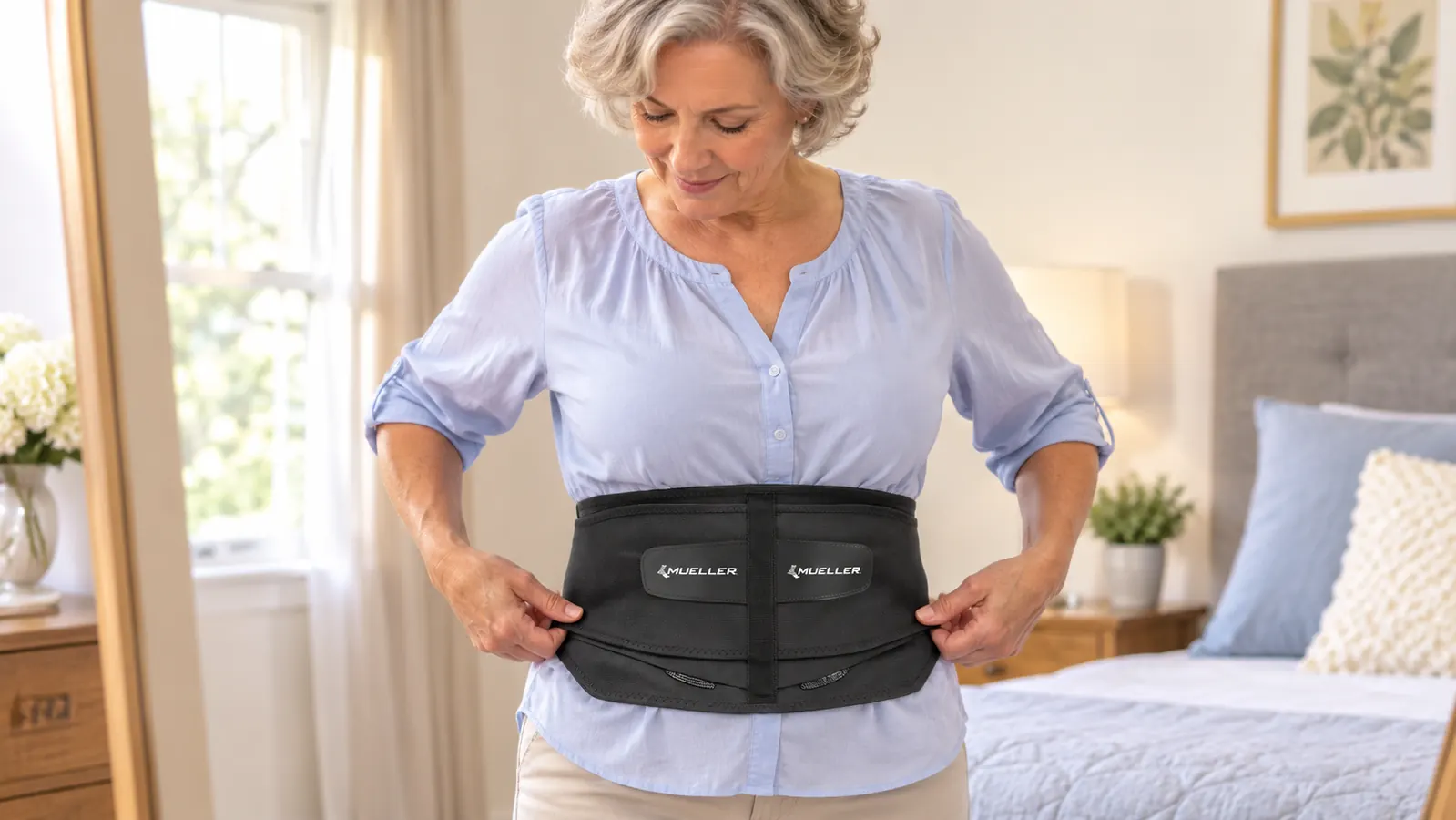
So the week before the recital, I did what I do now. I planned for the chair instead of hoping it would be fine. I packed the MUELLER Sports Medicine lumbar brace with the removable pad, the one I had been wearing around the house for a couple of months, and I fastened it in the car before we walked in.
Here is what it is, plainly. It is a stretchable lumbar support band with a removable pad and four steel springs down the back that deliver firm, targeted compression. It weighs sixteen ounces. It adjusts, which matters more than I expected, because on a bad morning I want it snug and on a good one I want to forget it is there. MUELLER has been making sports medicine gear for over sixty years, and this feels like equipment rather than a garment.
I want to be honest about what it did at the recital. It did not fix my back. Nothing fixes my back, and I would not trust anything that promised to. What it did was make ninety minutes in a folding chair feel like ninety minutes instead of a long stretch of quiet misery. My granddaughter sang her two songs. I watched her face instead of watching the clock.
It did not fix my back. It bought me ninety minutes I would otherwise have spent watching the clock instead of my granddaughter.
That folding chair is not getting any softer
This is the brace I keep in the car now, for recitals, choir rehearsals, and long drives to Boise. Sixteen ounces, adjustable, with a removable pad and four steel springs.
Amazon Check Today's Price on Amazon →I put it on about fifteen minutes before we left the car, and I wore it the whole time. Not once did I shift in that seat the way I usually do, that small eternity of leaning forward and back trying to find a position. Driving home the next day I wore it again for the Boise to Pendleton leg and took it off at the rest stop. That is the pattern now. Long sitting, long standing, long drives.

At home I wear it for choir rehearsal on Wednesday nights, because standing through a full anthem run is harder on me than walking a mile, and I wear it when I paint at the easel off the kitchen for more than an hour. I do not wear it all day. I do not sleep in it. My physical therapist was clear that a brace supports you while you do the work, it does not do the work for you, and I have kept up the exercises she gave me.
Things I do not love. It warms up after a couple of hours and I am ready to take it off. It shows under a fitted blouse, so I plan around that and wear it over a shirt or under something looser. And sizing matters: MUELLER tells you to measure around the widest part of your waist, and I am glad I did, because guessing would have put me in the wrong one. The regular fits twenty-eight to fifty inches.
None of that is a reason to skip it. Wearing it through a recital, a rehearsal, a six-hour drive, that is worth a little warmth and a looser blouse. What it is not is a replacement for the boring work, the stretching and the strengthening that my therapist handed me on a photocopied sheet two years ago.
What I'd Tell You If We Were Sitting at My Kitchen Table
If we were sitting at my kitchen table with coffee, here is what I would tell you. Measure your waist before you order, not after. Wear it around the house for an hour on a day you are not going anywhere, so you learn how snug you want it before you are sitting in a gym with two hundred people. Give it two weeks of ordinary days before you decide anything. And keep doing whatever your physical therapist told you, because a brace that holds you up while you sit still is not the same as a back that is getting stronger.
One more thing, and I mean it. I am not a doctor. I am a retired art teacher with a cranky disc and a recliner in the living room. If your pain is new, or sharp, or getting worse, or if it runs down your leg, that is a conversation for a doctor or a physical therapist before it is ever a conversation about a brace.
Second row, two songs, and I never once shifted in my seat
If long sitting is the thing that undoes your good weeks, start with the sizing chart and one ordinary afternoon at home. That is how I figured out how snug I wanted mine.
Amazon Check Today's Price on Amazon →