

The first night I used the Contour Legacy knee pillow, I woke up around three in the morning, fished it out from between my knees, and dropped it on the floor beside the bed. I want to start there because almost every review of this thing opens with the happy ending, and that would be a lie about how the first week goes. My lower back has been an ongoing project since a disc flare-up at fifty-eight, so I have tried a fair amount of gear that was supposed to help and did not. A foam wedge had about the same chance as everything else.
So I picked it up again the next night. Then the night after that. Six weeks later it lives on my side of the bed, and my husband Gary has stopped asking what the thing on the floor is when he gets up for water. This is the honest version: what the Contour pillow does for a side sleeper, what it does not do, and the parts of actually living with it that the product page leaves out.
The Quick Verdict
It stops my knees from stacking and my hips from twisting, and it sleeps cooler than a block of foam has any right to. The first week is awkward, and it is not a substitute for a mattress that holds you up.
Amazon Check Today's Price →Six weeks later, it is still on my side of the bed
The Contour Legacy knee pillow is the only piece of sleep gear I have kept using after the novelty wore off. If your top leg slides forward at night and your lower back pays for it by morning, this is the one I would start with.
Amazon Check Today's Price on Amazon →How I've Used It
I am a side sleeper by default. I start on my left, roll onto my right within twenty minutes, and stay there until morning. My physical therapist has been telling me for years to put something between my knees, and for years I used a folded fleece blanket, which works for about an hour and then ends up somewhere near my ankles. I would wake up, find it, fold it again, and repeat that two or three times a night.
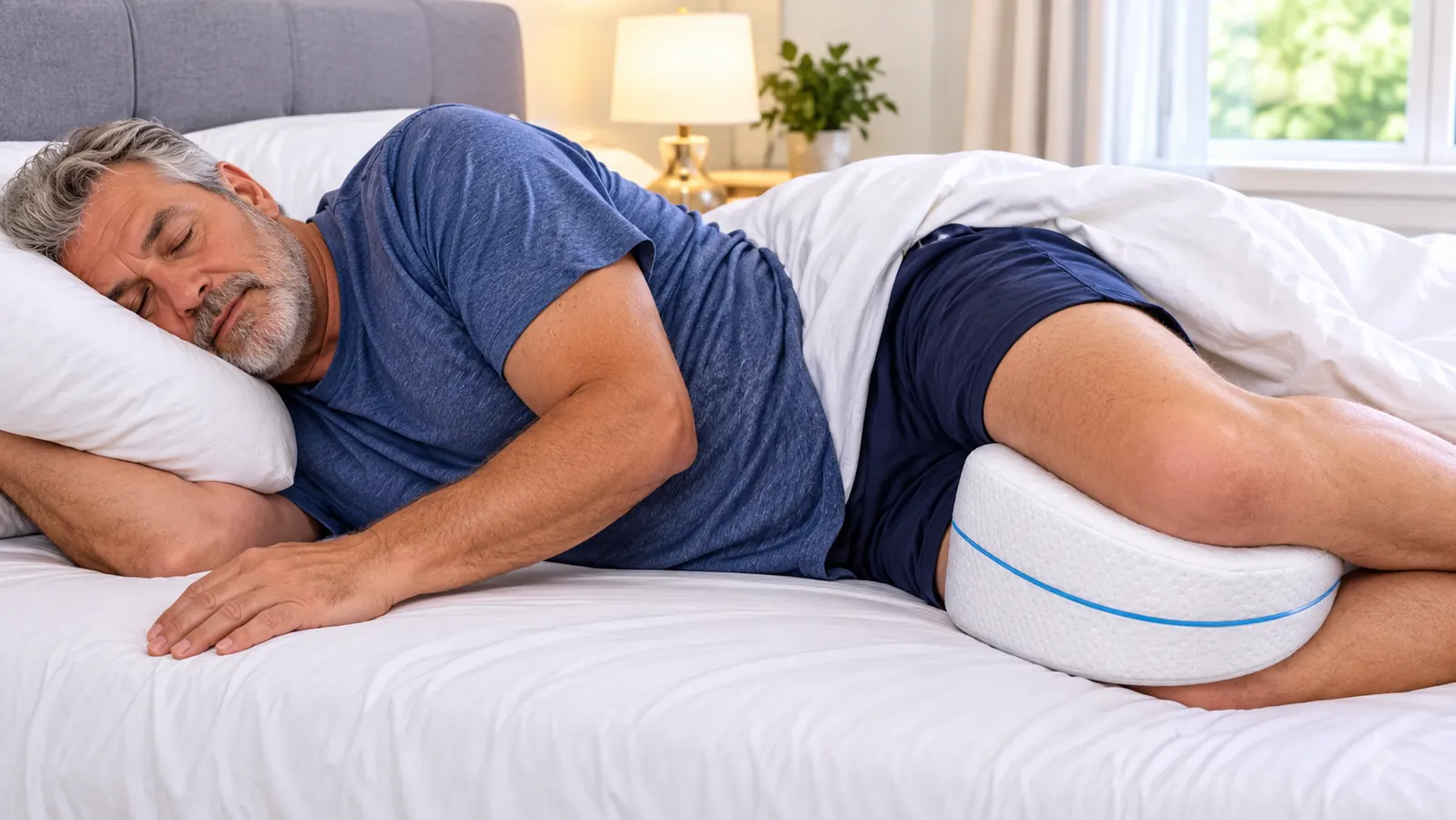
The Contour Legacy pillow is a memory foam shape about ten inches long and nine and a half inches wide, designed to sit between your legs so both knees and both thighs stay supported instead of pressing against each other. I used it every single night for six weeks. I also tried it behind my lower back, and under my knees on the nights I rolled onto my back, which is not what it is built for but is the sort of thing a person does at two in the morning when their back is talking.
For context, I am sixty-three, I live in Spokane, and I sing alto in my church choir on Sunday mornings and at Wednesday rehearsals. Sitting through a rehearsal used to leave my right hip aching by the closing prayer. That has not disappeared, but it eased enough over the six weeks that I noticed it, and I am not a person who notices things.
The First Ten Nights Were Not What I Expected
Nobody warns you that a knee pillow changes how you sleep, not just what you sleep on. For the first several nights my knees felt propped apart and my right hip felt like it was being asked to hold a position it had never held. It was not painful. It was just different, and different is enough to wake a sixty-three-year-old woman up twice a night.
The foam is denser than a folded blanket and it does not flatten out under your legs by midnight. It feels firm against the inside of the knee at first, then it takes on your body heat and softens just enough to stop being the thing you are thinking about. I also kept waking up on my back that first week, which I put down to my body arguing with the new arrangement.
By night four I had stopped noticing it. By night ten I noticed when it was gone, which is the sort of thing that tells you more than a score ever will. If you are the kind of person who gives up on a new pillow after two nights, plan for that now.
By night ten I stopped waking up with my top leg dropped forward and my right hip already complaining before my feet hit the floor.
The Heat Question, Because Foam Worries Me
I run warm. I have slept with a fan on in October. A block of memory foam held between your knees for eight hours sounds like a recipe for waking up at two in the morning with a damp patch behind your knees, and that was my main hesitation before I ordered it.
It sleeps cooler than that worry suggested. The foam is built to push heat outward, away from your body, and the cover is a blend of polyester and lyocell that feels cooler against the skin than the fleece blanket I used for years. On a hot July night in Spokane I still noticed it, but I also noticed the sheet, so I am not going to blame the pillow for the weather.
It is washable, which matters more than I expected for something that sits against your skin all night. I have washed mine twice on cold and let it air dry, and it came back to its shape both times. I would not put it in a hot dryer, and I would not need to.
What Nobody Tells You Before You Buy
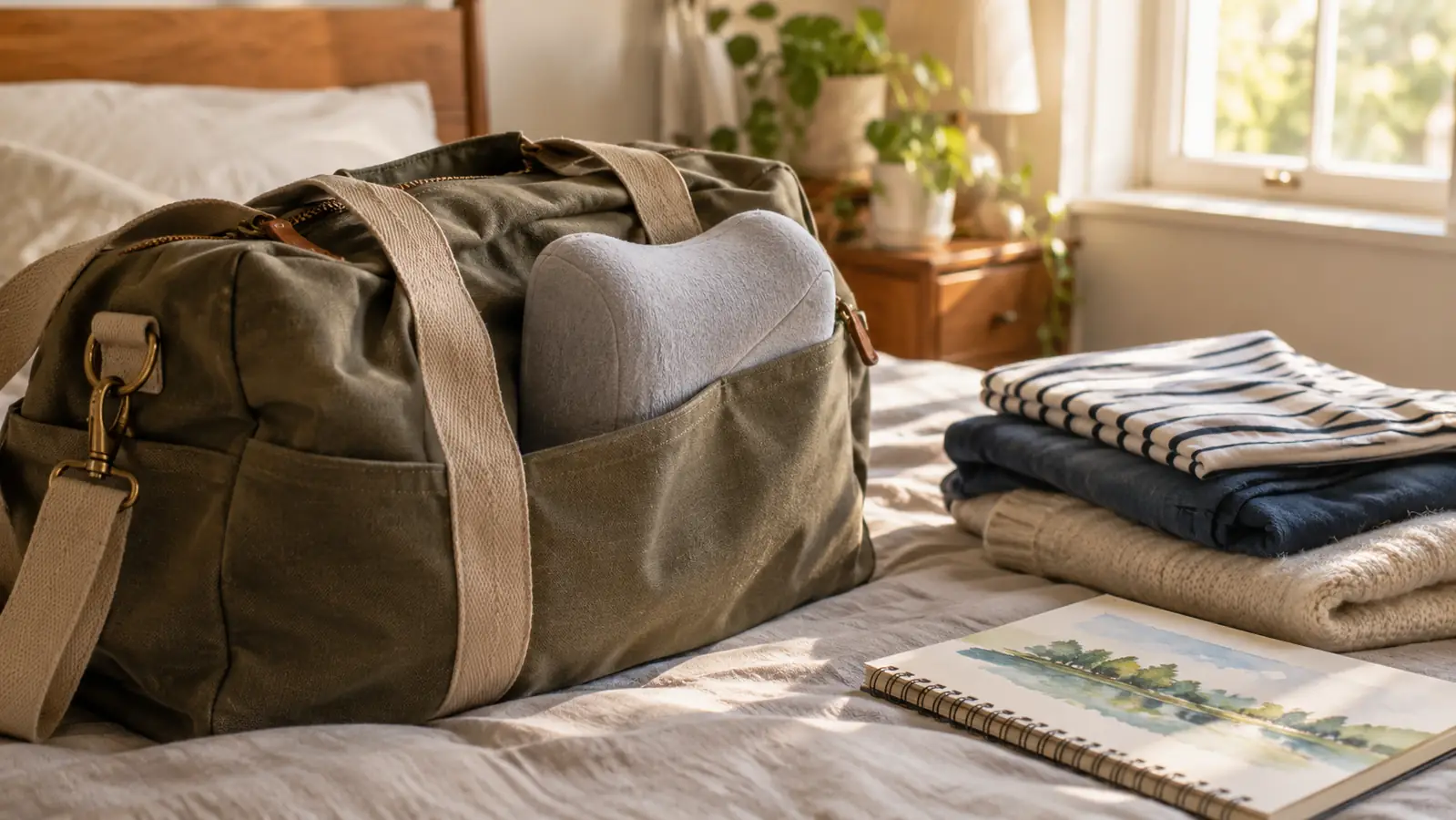
It weighs about seven ounces, so it is easy to move, easy to pack, and easy to lose under the covers. I drove to Boise to see my grandchildren twice during the six weeks and took it both times. It went into the outside pocket of my bag without crowding anything, which is more than I can say for the body pillow I tried a few years back.
It does one job. It keeps your legs and knees aligned while you sleep on your side. If your mattress is sagging in the middle, or your back is in an active flare, this pillow is not going to carry that load. Mine is a firm queen and it is doing its part. On a soft mattress I suspect this would be a much less impressive purchase, and I would rather say that than have you find out the hard way.
The adjustment period is real and it is not advertised. The Contour pillow asks your hips to hold a slightly different position all night, and for the first week your body has opinions about that. If you quit after two nights because your hip feels strange, you will never find out whether it works for you.
And it is small. That is the point, and it is also the catch. If you move a lot in your sleep, you will occasionally wake up with it down by your calves. I still do, maybe once a week, and I fish it back into place without fully waking up.
One more thing. It is not a pillow you fluff. There is no adjusting it into a better shape at two in the morning. It is foam, it is the shape it is, and your job is to put it in the right place and then leave it alone. That took me longer to accept than I expected it to.
How It Compares to a Folded Blanket and a Body Pillow
A folded blanket is free and it works for about an hour. That is the whole comparison. It compresses, it slides, and by morning it is somewhere near your feet. I spent years on that cycle, and I do not miss any part of it.
A body pillow keeps your knees apart too, but it takes up a good share of the bed and it is a lot of fabric to keep cool in summer. Gary has opinions about bed space, and a body pillow would have given him more of them. The Contour pillow stays where you put it because it is small and because it lives between your legs rather than wrapped around your whole body.
The trade is coverage. A body pillow supports your shoulders and hips as well. This one supports the gap between your knee and thigh and stops there. For my particular problem, that narrow job turned out to be the one that mattered, but I want to be clear that it is narrow.
There are also cheaper foam wedges shaped roughly the same way. I have not used them and I am not going to pretend I have. What I can tell you is that this one has held its shape through six weeks of nightly use and two washes, and that is the part I care about.
What My Mornings Look Like Now
The change is easiest to describe in the morning rather than the evening. Before, I would swing my feet out of bed and there would be a second or two where my lower right back reminded me exactly where it was. That pause has mostly gone. It is not a dramatic transformation and it is not a cure. It is the difference between a stiff start and a normal one.
The other thing I noticed is that I am not rolling onto my back as often. I do not have a sleep tracker and I am not going to pretend I measured it. I just know that I used to wake up flat on my back with my arms over my head two or three times a week, and now it is closer to once. That may be the pillow and it may be the fact that I stopped drinking iced tea after seven. Either way, I will take it.
Choir rehearsal is still a long sit, and a pillow between your knees at night does not fix a folding chair. I stand up during the breaks now, which my physical therapist suggested a year ago and I finally started doing. The pillow is one piece of a routine, not the whole routine.
I still have bad weeks. Weather changes bother me, and a long drive to Boise is a long drive to Boise no matter what is in my bag. What has changed is the baseline, and it changed slowly enough that I almost missed it.
Three Things I Would Change
The first is the size. Ten inches by nine and a half is small enough to travel and small enough to vanish under the covers. I would trade a little more surface for a little less chasing. It is a minor complaint and it is the only one I have made more than once.
The second is the adjustment period. I do not know how you would fix it, but a note in the box saying give this ten nights would have saved me from a three in the morning floor toss on night one. The Contour pillow is not a bad product for being unfamiliar. It is just unfamiliar.
The third is that there is no version of this with more coverage. I would like a slightly larger one for the nights my shoulders are the problem, and it does not exist as far as I can tell. That is less a flaw than a limit, and it is a limit worth knowing before you order.
What I Liked
- Keeps both knees and both thighs supported, so the top leg stops sliding forward
- Memory foam holds its shape through the night instead of compressing like a folded blanket
- Sleeps cooler than a block of foam suggests, with a polyester and lyocell cover
- About seven ounces, so it packs into a travel bag without crowding it
- Washable, which matters for something against your skin every night
- One year manufacturer warranty
Where It Falls Short
- The first week of sleeping with it is genuinely awkward
- It only addresses leg alignment, not mattress support or an active flare
- Small enough to end up down by your calves if you move a lot
- Not enough coverage if you also want shoulder and hip support
Who This Is For
If you sleep on your side, if your top leg slides forward and your lower back complains by morning, and if a doctor or physical therapist has already told you to put something between your knees, this is the most straightforward version of that advice I have found. It is also for anyone who tried a folded blanket or an extra pillow and got tired of chasing it around the bed at three in the morning.
It suits people who will give something ten nights before deciding. If you want a change you feel on night one, this is not that, and I would rather tell you now.
I will say one more time that I am not a medical professional. What I am is a sixty-three-year-old woman with a cranky lower back who has tried a lot of things and kept this one. That is the whole of my authority.
Who Should Skip It
Skip it if your back pain is new, severe, or getting worse. I am not a doctor and I am not going to pretend a foam pillow is a diagnosis. That is a conversation to have with your doctor or physical therapist, and it should come before any purchase, including this one.
Skip it if you mostly sleep on your stomach or your back, because this is built for side sleeping. Skip it if your mattress is past its useful life. A pillow between the knees cannot make up for a bed that is not holding you up. And skip it if you want one purchase that solves the whole night. This solves a small, specific piece of it, and it solves that piece well.
The ten-night test I would give it if I were you
Give the Contour Legacy knee pillow a real week and a half before you decide. Mine earned its place on the bed somewhere around night four, and by night ten I noticed when it was gone. That is the most honest test I can hand you, and it is the one I would want if I were reading this instead of writing it.
Amazon Check Today's Price on Amazon →